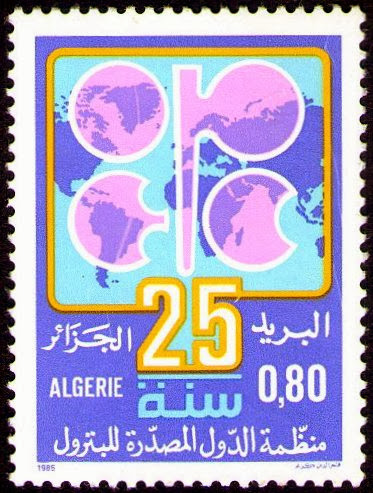
25th Anniversary of OPEC
The Organization of the Petroleum Exporting Countries (OPEC), created in Baghdad (Iraq) in September 1960, brings together, in addition to Algeria, twelve countries from Africa, Asia and Latin America. Its headquarters is in Vienna (Austria).
The objectives of the Organization are:
- coordinate and unify the oil policies of member countries;
- stabilize oil prices on international markets and defend the purchasing power of this material;
- ensure a flow of income to producing member states and a regular supply of oil to consuming nations.
The Organization of the Petroleum Exporting Countries is a permanent intergovernmental institution. The OPEC Conference, in which the ministers of member countries responsible for oil issues participate, is the supreme authority of the Organization.
The Board of Governors composed of governors appointed by member countries conducts the affairs of the Organization and implements the decisions of the Conference.
The Secretary General is the legal representative of the Organization. Appointed by the Conference of Ministers, he organizes and administers the work of the Organization.
Since its creation in 1960, the Organization of the Petroleum Exporting Countries has played an ever-increasing role in redefining the structure and functioning of the international oil market. Given the significant hydrocarbon reserves of the Organization's member countries, the latter will have to play a leading role in supplying the world market over the coming decades.
The Organization of the Petroleum Exporting Countries, which constitutes an example of an association of developing countries for the defense of the purchasing power of a strategic raw material, demonstrates its solidarity with other Third World countries, in particular through the actions of the OPEC Fund.
The objectives of the Organization are:
- coordinate and unify the oil policies of member countries;
- stabilize oil prices on international markets and defend the purchasing power of this material;
- ensure a flow of income to producing member states and a regular supply of oil to consuming nations.
The Organization of the Petroleum Exporting Countries is a permanent intergovernmental institution. The OPEC Conference, in which the ministers of member countries responsible for oil issues participate, is the supreme authority of the Organization.
The Board of Governors composed of governors appointed by member countries conducts the affairs of the Organization and implements the decisions of the Conference.
The Secretary General is the legal representative of the Organization. Appointed by the Conference of Ministers, he organizes and administers the work of the Organization.
Since its creation in 1960, the Organization of the Petroleum Exporting Countries has played an ever-increasing role in redefining the structure and functioning of the international oil market. Given the significant hydrocarbon reserves of the Organization's member countries, the latter will have to play a leading role in supplying the world market over the coming decades.
The Organization of the Petroleum Exporting Countries, which constitutes an example of an association of developing countries for the defense of the purchasing power of a strategic raw material, demonstrates its solidarity with other Third World countries, in particular through the actions of the OPEC Fund.