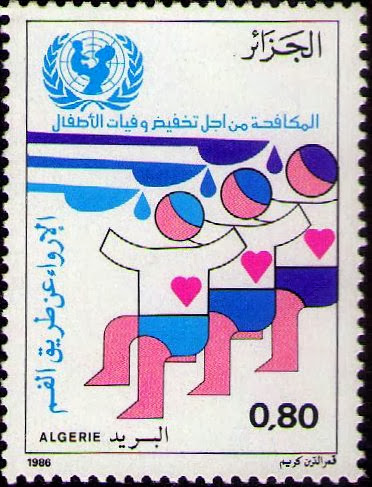
Fight Against Infant Mortality
Millions of children die every year around the world. This phenomenon mainly affects the most deprived areas of the planet. Members of the international community have addressed this problem within the institutions of the United Nations, such as UNICEF, and have implemented numerous programs aimed at stemming the scourge of infant mortality.
In Algeria, the public authorities have developed a child protection policy through preventive public health programs, school hygiene and the development of pediatrics and obstetrics.
Among the most remarkable measures to combat infant mortality, general vaccination of all children constitutes a decisive part in the reduction, if not elimination, of infant mortality against the most dangerous diseases: tuberculosis, diphtheria, tetanus, whooping cough, poliomyelitis and measles.
Regular campaigns are carried out as well as a program by geographical area is drawn up to obtain a satisfactory rate of preventive coverage.
The second measure refers to monitoring growth. The network of PMIs (Maternal and Child Protection Centers) continues to experience significant densification to meet the needs for medical monitoring and continued protection of the child.
The third point concerns the fight against dehydration and water-borne diseases which represent 50% of infant mortality. This is how Unicef is collaborating with the Algerian government to achieve the objective that the latter has set for itself: “Vaccinate all Algerian children before 1990 and halve infant mortality”.
In accordance with the health and social policy pursued by our country, this aspect will require more and more human and material resources in the future, commensurate with the improvement in the degree of socio-economic development of Algerian society and the evolution of its population.
In Algeria, the public authorities have developed a child protection policy through preventive public health programs, school hygiene and the development of pediatrics and obstetrics.
Among the most remarkable measures to combat infant mortality, general vaccination of all children constitutes a decisive part in the reduction, if not elimination, of infant mortality against the most dangerous diseases: tuberculosis, diphtheria, tetanus, whooping cough, poliomyelitis and measles.
Regular campaigns are carried out as well as a program by geographical area is drawn up to obtain a satisfactory rate of preventive coverage.
The second measure refers to monitoring growth. The network of PMIs (Maternal and Child Protection Centers) continues to experience significant densification to meet the needs for medical monitoring and continued protection of the child.
The third point concerns the fight against dehydration and water-borne diseases which represent 50% of infant mortality. This is how Unicef is collaborating with the Algerian government to achieve the objective that the latter has set for itself: “Vaccinate all Algerian children before 1990 and halve infant mortality”.
In accordance with the health and social policy pursued by our country, this aspect will require more and more human and material resources in the future, commensurate with the improvement in the degree of socio-economic development of Algerian society and the evolution of its population.