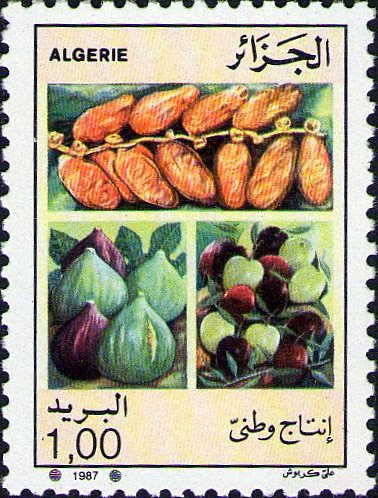
Algerian Fruits (Dates, Figs, Plums)
A growing engine of the national economy, agriculture in Algeria has experienced significant changes in agrarian structures since 1973.
The State's contribution is considerable in the support mechanism for agricultural operations. The rural world represents 60% of the total population and agriculture alone occupies a quarter of the active population.
A new reorganization, encompassing incentive provisions for financing, credit, prices, taxation, agricultural insurance and trade, is adopted. The development of land at the symbolic dinar, open to companies with non-resident capital, particularly in the Great South, offers access to large-scale agricultural exploitation.
Committed as part of the Agrarian Revolution, 6,000 agricultural cooperatives were subject to nationalization measures and limitation of property.
Algeria has managed to improve the nutritional situation of the population, which has doubled since 1965. The evolution of the average consumption of the Algerian since 1968 has seen an upward trend in terms of quantity and a more judicious balance of quality.
The nutritional situation of production in general has shown a favorable development in view of the downward trend in the main nutritional deficiencies. The sector's results for agricultural value added per agricultural worker are $1,912, compared to $503 in 1962.
Agricultural added value per hectare of area used by agriculture is more than 90 dollars compared to its 1962 level (25.2 dollars). Yields per hectare are around +1% for cereals (wheat and barley) and dates, +0.8% for market garden products including 1.7% for tomatoes, 2.4% for dry onions and 1.4% for potatoes.
The State's contribution is considerable in the support mechanism for agricultural operations. The rural world represents 60% of the total population and agriculture alone occupies a quarter of the active population.
A new reorganization, encompassing incentive provisions for financing, credit, prices, taxation, agricultural insurance and trade, is adopted. The development of land at the symbolic dinar, open to companies with non-resident capital, particularly in the Great South, offers access to large-scale agricultural exploitation.
Committed as part of the Agrarian Revolution, 6,000 agricultural cooperatives were subject to nationalization measures and limitation of property.
Algeria has managed to improve the nutritional situation of the population, which has doubled since 1965. The evolution of the average consumption of the Algerian since 1968 has seen an upward trend in terms of quantity and a more judicious balance of quality.
The nutritional situation of production in general has shown a favorable development in view of the downward trend in the main nutritional deficiencies. The sector's results for agricultural value added per agricultural worker are $1,912, compared to $503 in 1962.
Agricultural added value per hectare of area used by agriculture is more than 90 dollars compared to its 1962 level (25.2 dollars). Yields per hectare are around +1% for cereals (wheat and barley) and dates, +0.8% for market garden products including 1.7% for tomatoes, 2.4% for dry onions and 1.4% for potatoes.