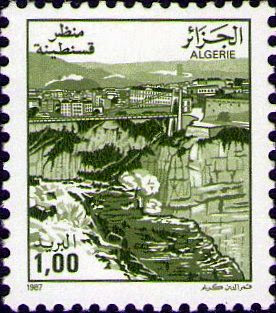
View of Constantine
Constantine has been continuously inhabited since ancient times. The first name given to it was Sarim Batim. This was at the time when the Carthaginians had established a trading post there. In the 3rd century BC, it was the eastern capital of the kingdom of the Massaesyles. A century later, Massinissa, the first king to unify the Berbers of Numidia, made it the capital of the kingdom under the name of Cirta.
The city remained for many years the hub of commercial life in North Africa and aroused the fear and respect of the Carthaginians who were expelled from it, but also of the Romans who aspired to occupy it.
With the death of Massinissa, the kingdom experienced turbulence and eventually crumbled, which opened the way for the Romans to attempt to conquer and annex Numidia and with it Cirta. Jugurtha resisted and recovered the city in 112 BC. BC after a five-month siege.
However, the Romans achieved their goals a few decades later, in the year 46 BC, under the reign of Julius Caesar. In the 2nd century, Cirta was the heart of a group of cities and towns called Republica IV Coloniarum Cirtensium, then became the capital of Northern Numidia.
In 311, local populations revolted against the power of Rome, leading Emperor Maxentius to destroy it. Emperor Constantine I had it rebuilt in 312 and gave it his name to become Constantine, as he gave its name to Constantinople (currently Istanbul). Then passing into the hands of the Vandals and the Byzantines, it was conquered by the Arabs, bearers of Islam, in the 7th century and has since enjoyed great cultural influence.
In the 16th century, the Ottomans took the city and made it the capital of Eastern Beylik. Salah Bey built Djamaâ El Kettani and the Sidi El Kettani madrassa, as well as the Sidi Lakhdar medersa and the very beautiful El Blat palace which became his home.
The city remained for many years the hub of commercial life in North Africa and aroused the fear and respect of the Carthaginians who were expelled from it, but also of the Romans who aspired to occupy it.
With the death of Massinissa, the kingdom experienced turbulence and eventually crumbled, which opened the way for the Romans to attempt to conquer and annex Numidia and with it Cirta. Jugurtha resisted and recovered the city in 112 BC. BC after a five-month siege.
However, the Romans achieved their goals a few decades later, in the year 46 BC, under the reign of Julius Caesar. In the 2nd century, Cirta was the heart of a group of cities and towns called Republica IV Coloniarum Cirtensium, then became the capital of Northern Numidia.
In 311, local populations revolted against the power of Rome, leading Emperor Maxentius to destroy it. Emperor Constantine I had it rebuilt in 312 and gave it his name to become Constantine, as he gave its name to Constantinople (currently Istanbul). Then passing into the hands of the Vandals and the Byzantines, it was conquered by the Arabs, bearers of Islam, in the 7th century and has since enjoyed great cultural influence.
In the 16th century, the Ottomans took the city and made it the capital of Eastern Beylik. Salah Bey built Djamaâ El Kettani and the Sidi El Kettani madrassa, as well as the Sidi Lakhdar medersa and the very beautiful El Blat palace which became his home.